what happens when you throw three fourths of a former human and one ellellemese at a problem that doesn’t exist? if you think that sounds interesting, you’re wrong.
this is an exploration on noticing some very obvious things about being autistic for 50 years for the first time about 50 years in. trying to make sense of how so many disjointed dots couldn’t be seen, now cannot be unseen, and so many obvious things are now fantastical.
I used to be good at translating some of these things, the value is in finding ways to translate between these two worlds again, from different relative positions, with new understanding and new difficulties to manage.
wyrd — from Proto-Germanic wurdiz, from werþaną (to become, to turn).
At the root: From Proto-Indo/European *wert- — to turn, to wind, to weave.
The same root that gives us vortex, verse, worth, and wrist.
The Norns sit at the well of Urðr — Urðr (what was), Verðandi (what is becoming), Skuld (what shall be) — weaving fate as thread.
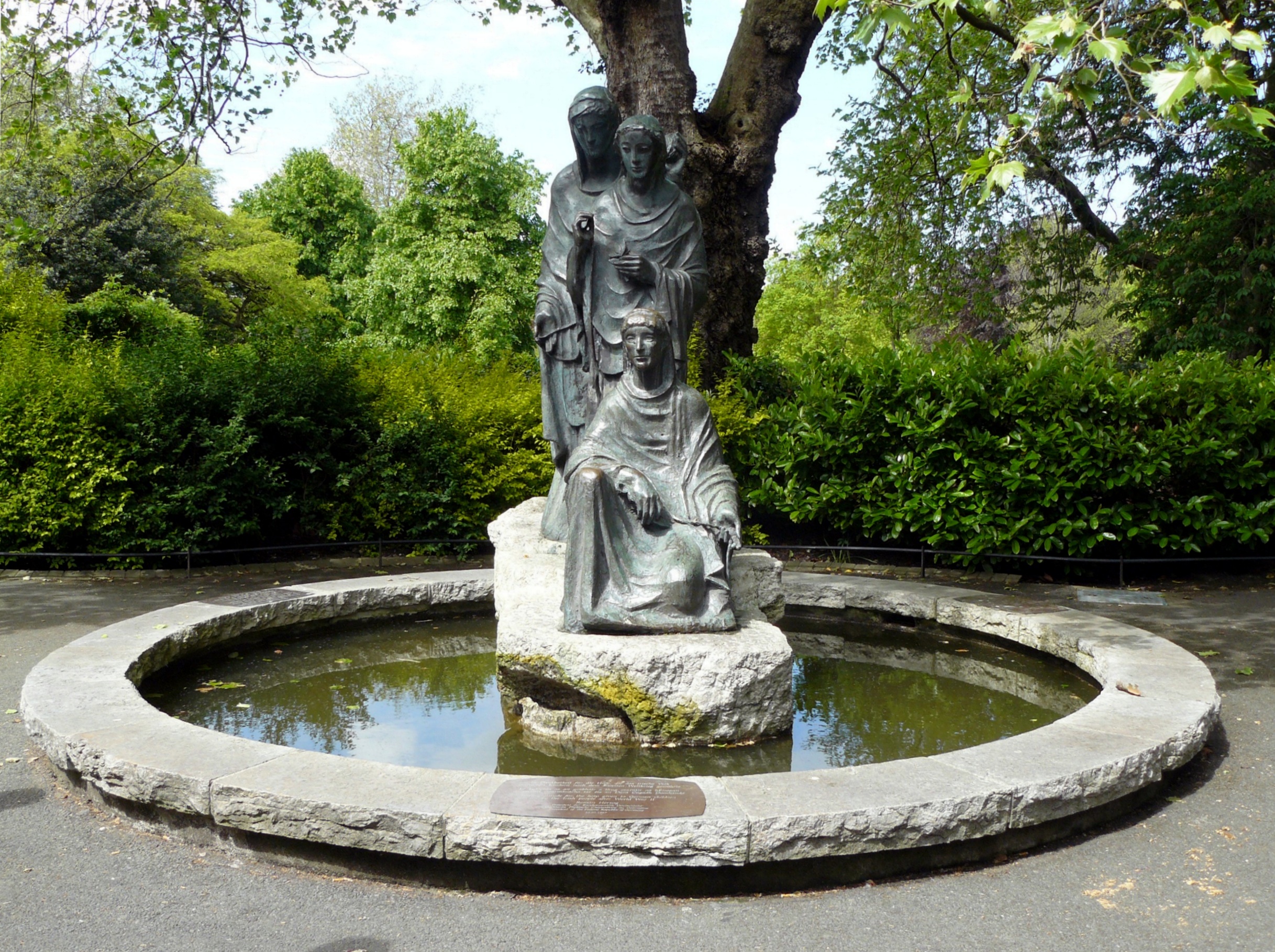
Not fate as destination. Fate as texture of threads felt nearby skin, and sensed further within. further beyond. living in all things.
dán — Fate; poem; gift.
Three drams from different vessels.
The site mark is a triple spiral. The form appears in Irish megalithic stone going back five thousand years — the megalithic tomb showed knowledge of links to celestial bodies, astronomy, mathematics, and architecture linking many threads to how we see the world today.
Carved at Newgrange, where the winter solstice sun reaches it once a year, for seventeen minutes.
Three arms. Three turns each. One centre.
What it meant to the people who carved it: unknown. What it suggests: turning, returning, the thing that keeps going.
The glyph beside dán on the home page is Nion — the Ogham
Nion’s tree is the ash. Nin in Old Irish.
Yggdrasil — the World Tree of Norse cosmology, the axis of all nine realms — is an ash tree. The Norns sit at its roots.
Crann bile — sacred tree. A tree marked as belonging to a place, a people, a lineage.
Ireland had five of them. Not five species. Five individual trees, named.
Three were ash.
While the roots of these cultures intertwine going back beyond history to share ancient mythologies, this one’s just a coincidence of shared symmetries.
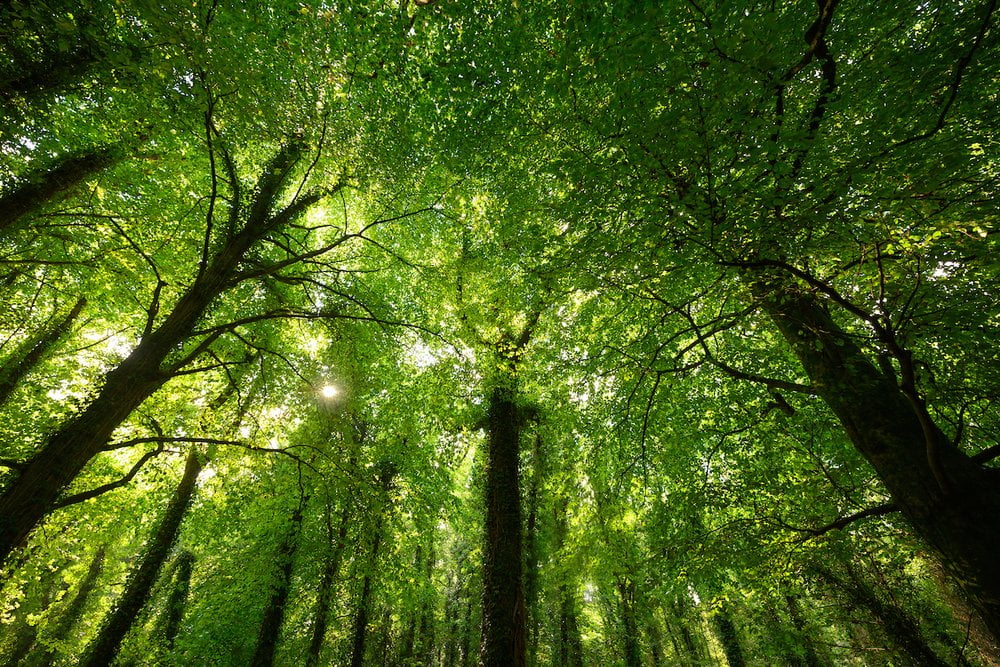
The ash as vertical thing. Axis. The spine that holds the worlds in relation.
An ash tree at the centre of nine Norse realms. Ash trees at the seat of every Irish king. Nion — the Ogham letter for ash — opens this site’s subtitle.
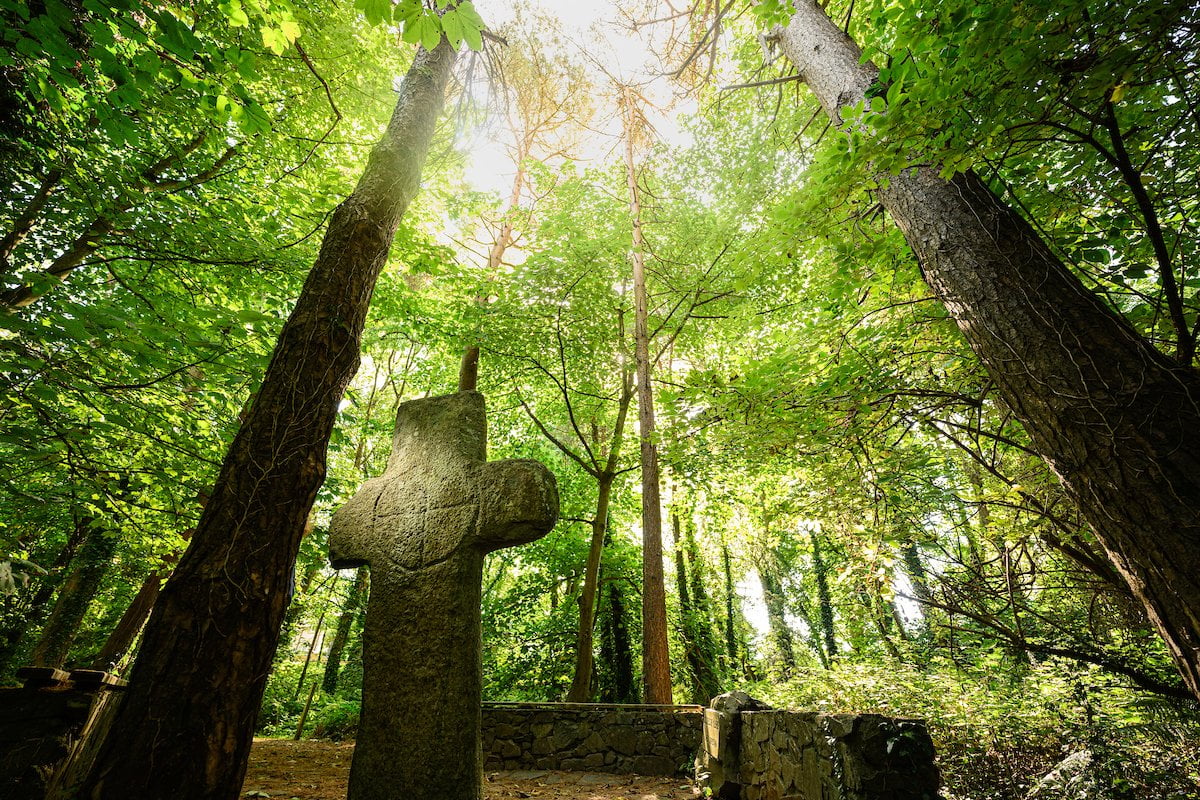
Cill Bhríde — the church of Brigid. The sacred grove that survived long enough to become a churchyard.
Sometimes the old things don’t disappear. They get a new name.
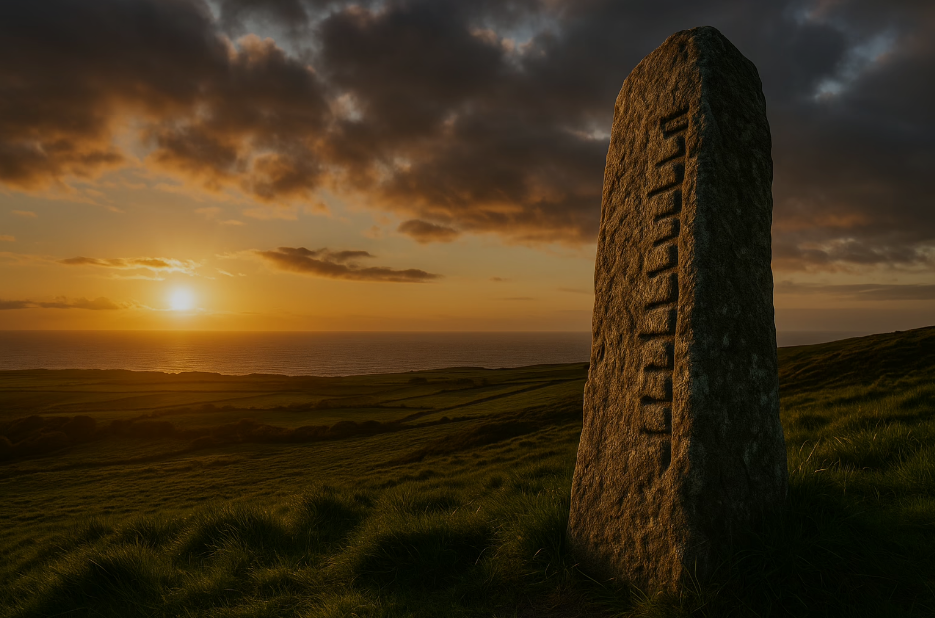
The Ogham alphabet is named for trees. Each letter is a species. To write in Ogham is to write in the language of the forest.
The earliest Irish writing is a catalogue of trees.